Animals
-
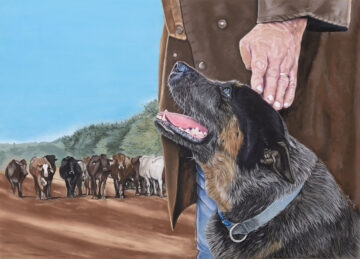
Good Job Girl
Pastel on Pastelmat Card (Sold)
87cm W x 67 cm H
The Australian Cattle Dog (also known as Blue or Red Heelers) was developed for its ability to drive cattle over long distances in the harsh Australian Outback. It is now considered the best breed in the world for this task. It is a sturdy, muscular, compact dog capable of great speed, agility and strength, when required. It will create a strong bond with its owner, typically resulting in the dog never being too far from the owner’s side. The Australian Cattle Dog can be the friendliest of companions, although as it is quick to respond to the emotions of its owners, it will typically be very protective of them and may defend them without waiting for a command. All these combinations make it an excellent farm dog, working when required and caring for the children, keeping them safe from snakes and other “intruders”. In this image, the quintessential Aussie farmer is not gushy with his dog, just a gentle touch on her head tells her she has done a “good Job”.
Read more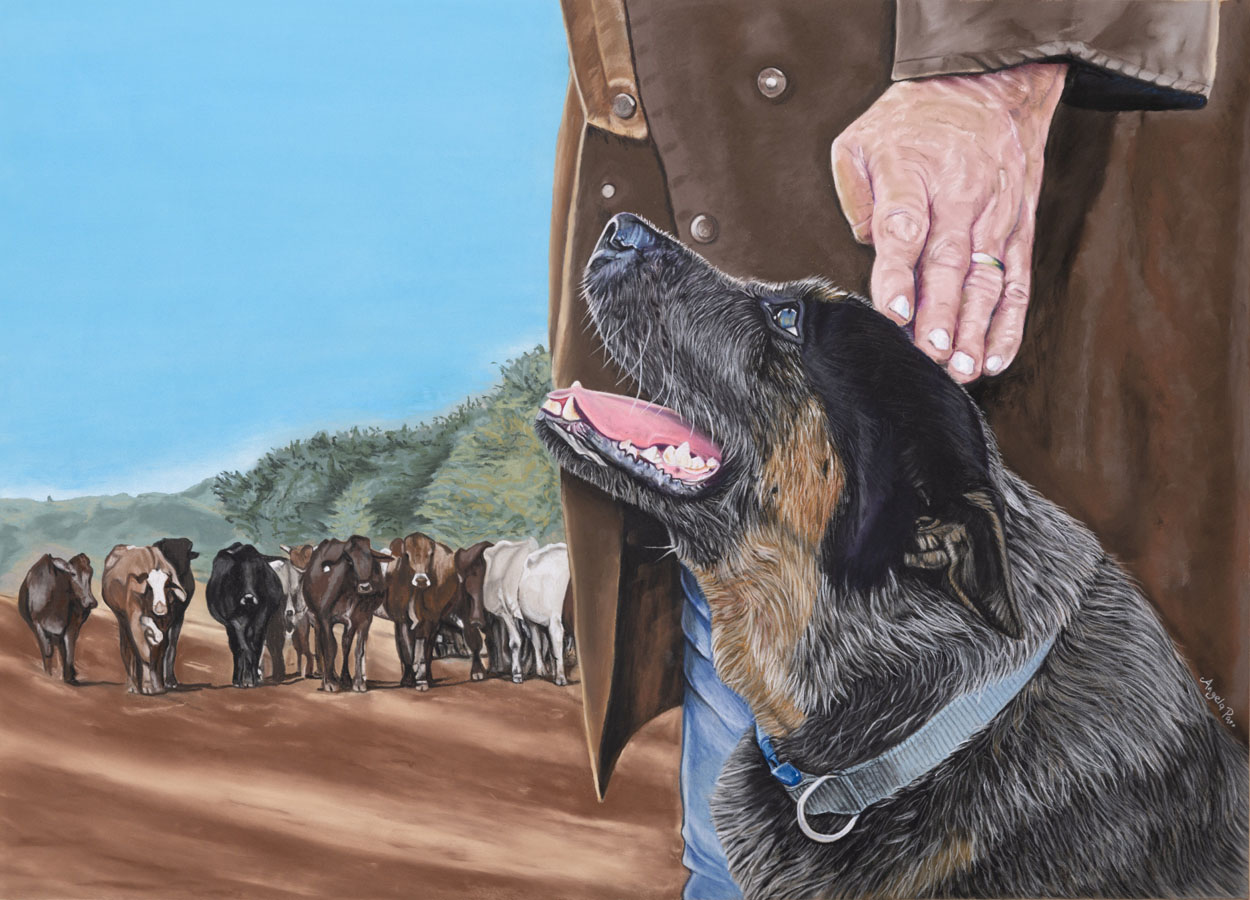
Good Job Girl
Pastel on Pastelmat Card (Sold)
87cm W x 67 cm H
The Australian Cattle Dog (also known as Blue or Red Heelers) was developed for its ability to drive cattle over long distances in the harsh Australian Outback. It is now considered the best breed in the world for this task. It is a sturdy, muscular, compact dog capable of great speed, agility and strength, when required. It will create a strong bond with its owner, typically resulting in the dog never being too far from the owner’s side. The Australian Cattle Dog can be the friendliest of companions, although as it is quick to respond to the emotions of its owners, it will typically be very protective of them and may defend them without waiting for a command. All these combinations make it an excellent farm dog, working when required and caring for the children, keeping them safe from snakes and other “intruders”. In this image, the quintessential Aussie farmer is not gushy with his dog, just a gentle touch on her head tells her she has done a “good Job”.
Quick View -
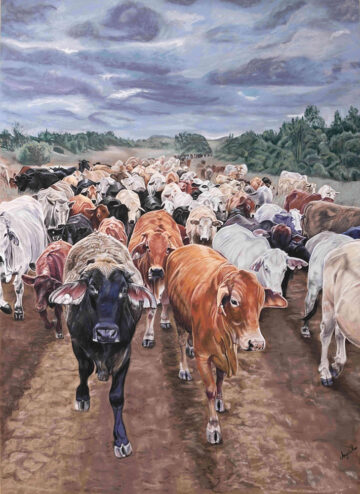
Homeward Bound
Pastel on Pastelmat Board ($POA)
Image size 84 cm h x 60 cm w
Framed 104 cm h x 80 cm wA large mixed breed herd head for the safety of a home paddock at Springsure, near Winton, ahead of a typical western Queensland summer storm.
Read more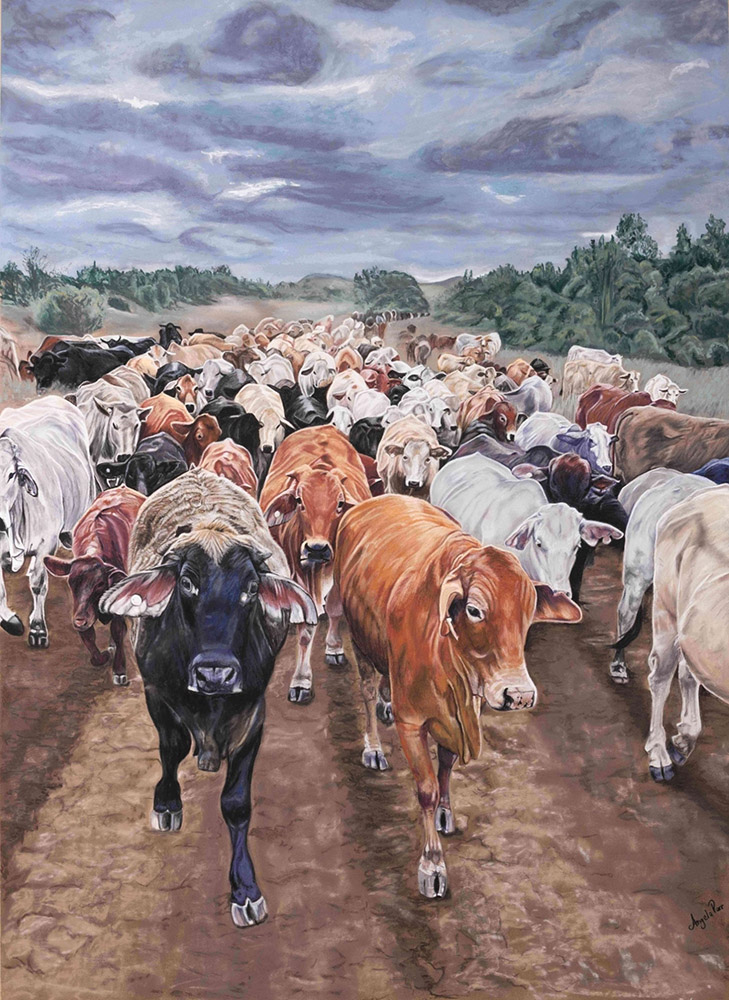
Homeward Bound
Pastel on Pastelmat Board ($POA)
Image size 84 cm h x 60 cm w
Framed 104 cm h x 80 cm wA large mixed breed herd head for the safety of a home paddock at Springsure, near Winton, ahead of a typical western Queensland summer storm.
Quick View -
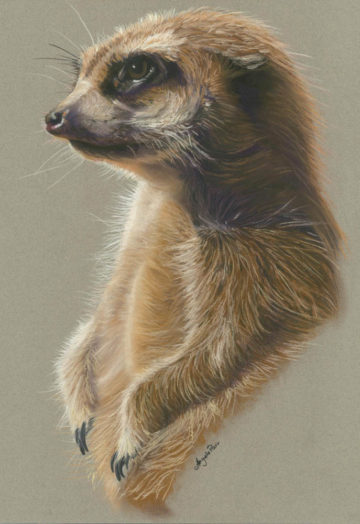
Suricate Sentinel
Pastel on Canson pastel paper (Sold)
32cm W x 45cm H
The Meerkat (Suricata suricatta) is a highly intelligent omnivore (standing only about 25 – 30cm from head to rump) found in southern Africa. The dark patches around their eyes help cut down on the sun’s glare, and their thin fur and dark skin on their stomachs assists them to control body temperature. Their diet consists of insects, lizards, birds, and fruit. When hunting small game, they work together and communicate with purring sounds. As they forage for insects and other prey, they bury their heads in the sand, so they need a reliable and trusted sentry to be on the alert for predatory snakes, hawks, eagles and jackals. This curious upright stance keeps the rest of the gang safe.Read more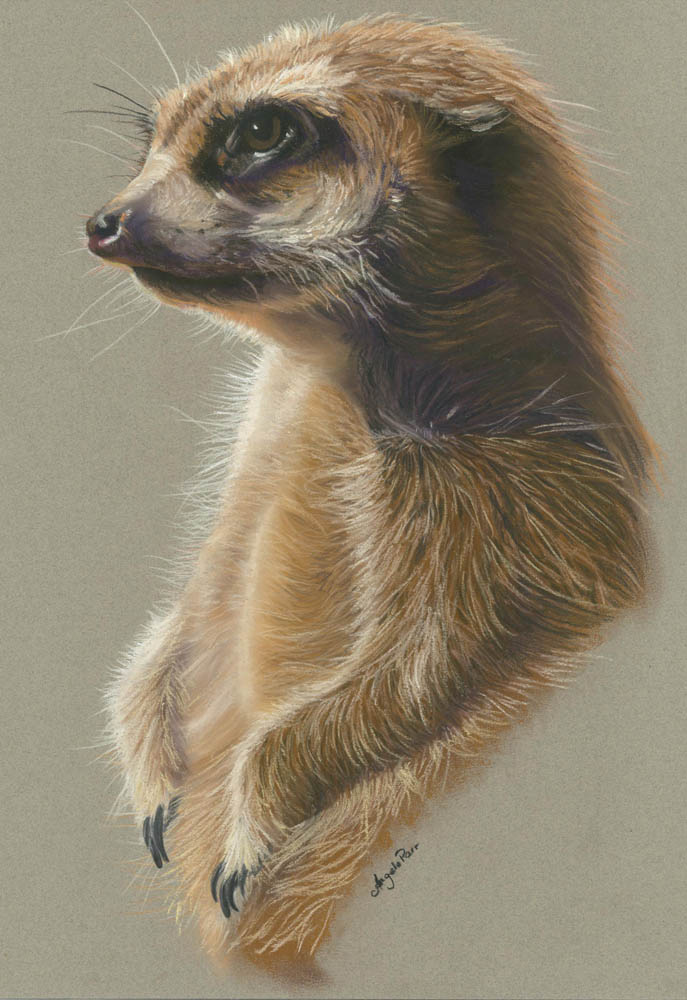
Suricate Sentinel
Pastel on Canson pastel paper (Sold)
32cm W x 45cm H
The Meerkat (Suricata suricatta) is a highly intelligent omnivore (standing only about 25 – 30cm from head to rump) found in southern Africa. The dark patches around their eyes help cut down on the sun’s glare, and their thin fur and dark skin on their stomachs assists them to control body temperature. Their diet consists of insects, lizards, birds, and fruit. When hunting small game, they work together and communicate with purring sounds. As they forage for insects and other prey, they bury their heads in the sand, so they need a reliable and trusted sentry to be on the alert for predatory snakes, hawks, eagles and jackals. This curious upright stance keeps the rest of the gang safe.Quick View -
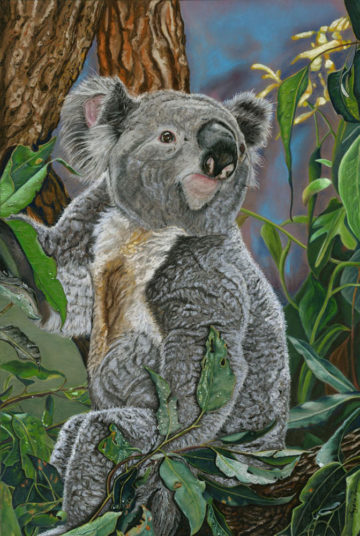
A Comfortable Seat
Pastel on Colour Fix Art Spectrum paper ($POA)
39 cm W x 58 cm H
The Koala (Phascolarctos cinereus) is an arboreal herbivorous marsupial, and an integral part of the Australian bush. They usually sleep for 20 hours a day, perched high up in eucalyptus trees. Their diet consists exclusively of these leaves, considered poisonous to most other animals. The word ‘Koala’ is thought to mean ‘no drink’ in the Australian Aboriginal language, however koalas do drink especially during heatwaves and in times of drought. Koalas are in serious danger of becoming extinct by 2050 due to deforestation, drought and bushfires.
This little guy is “Arni”, a northern koala (their fur is shorter and more silvery-grey than their southern cousins). He is a lovely gentle male, almost in his prime, who happily resides at the Byron Bay Wildlife Sanctuary, in northern NSW.Read more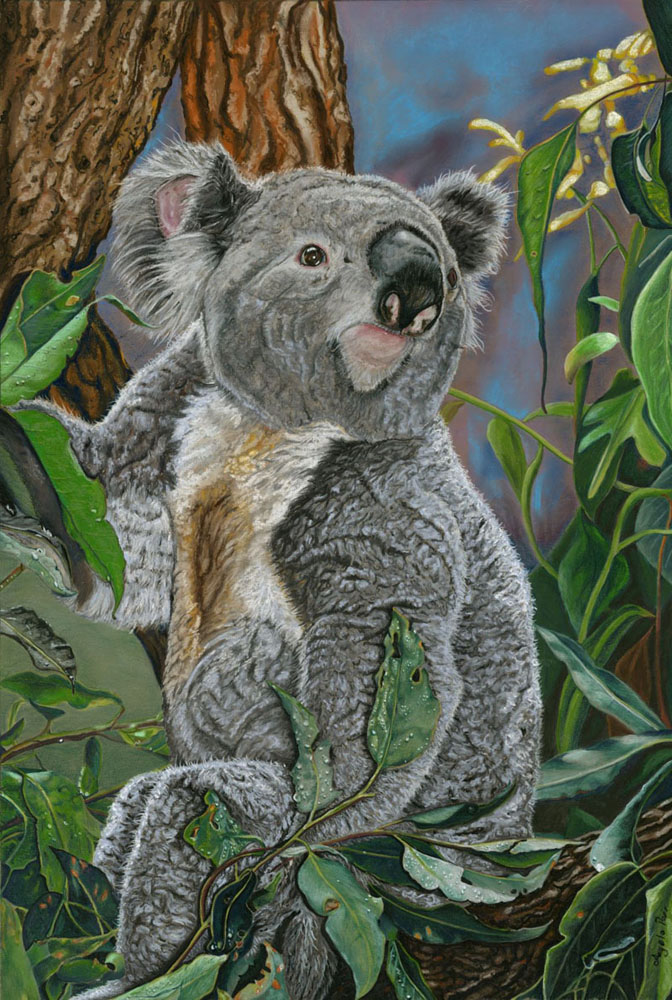
A Comfortable Seat
Pastel on Colour Fix Art Spectrum paper ($POA)
39 cm W x 58 cm H
The Koala (Phascolarctos cinereus) is an arboreal herbivorous marsupial, and an integral part of the Australian bush. They usually sleep for 20 hours a day, perched high up in eucalyptus trees. Their diet consists exclusively of these leaves, considered poisonous to most other animals. The word ‘Koala’ is thought to mean ‘no drink’ in the Australian Aboriginal language, however koalas do drink especially during heatwaves and in times of drought. Koalas are in serious danger of becoming extinct by 2050 due to deforestation, drought and bushfires.
This little guy is “Arni”, a northern koala (their fur is shorter and more silvery-grey than their southern cousins). He is a lovely gentle male, almost in his prime, who happily resides at the Byron Bay Wildlife Sanctuary, in northern NSW.Quick View -
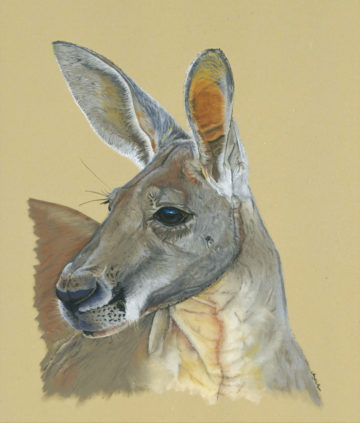
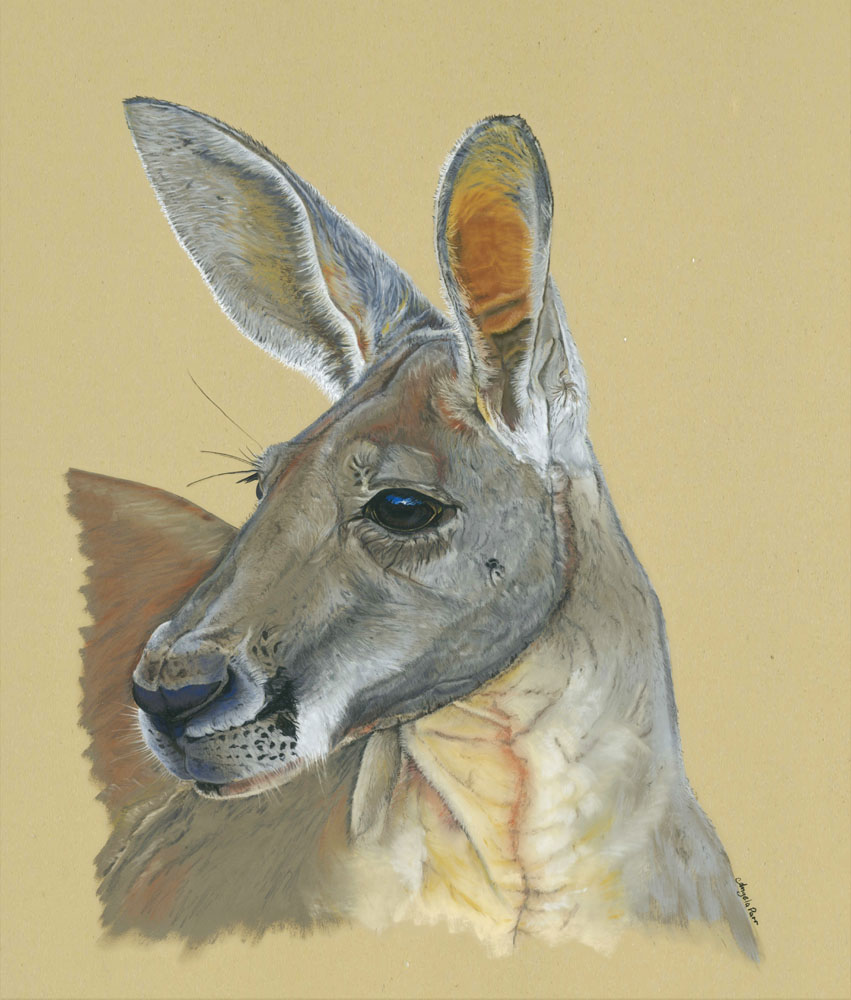
Andrew
Pastel on Pastelmat paper (Sold)
67 cm W x 88 cm H
Andrew is a big Red Kangaroo, (Macropus rufus) one of the many offspring of the famous alpha-male Red Kangaroo “Roger”, raised in the Kangaroo Sanctuary in Alice Springs. The Red Kangaroo is the largest of all kangaroos, which are terrestrial marsupials native to Australia, and they are found over most of the arid parts of the country, preferring flat open plains. Big Reds may weigh as much as 90kg and reach 1.8 meters in height when standing. When male kangaroos fight over potential mates, they appear to be boxing. They balance on their strong tails, grab their rival with their forearms and kick with their powerful hind legs. They attempt to push their opponent off balance. Kangaroos can also bite and wield sharp claws, which they may do in battle with an enemy like a dingo.Read more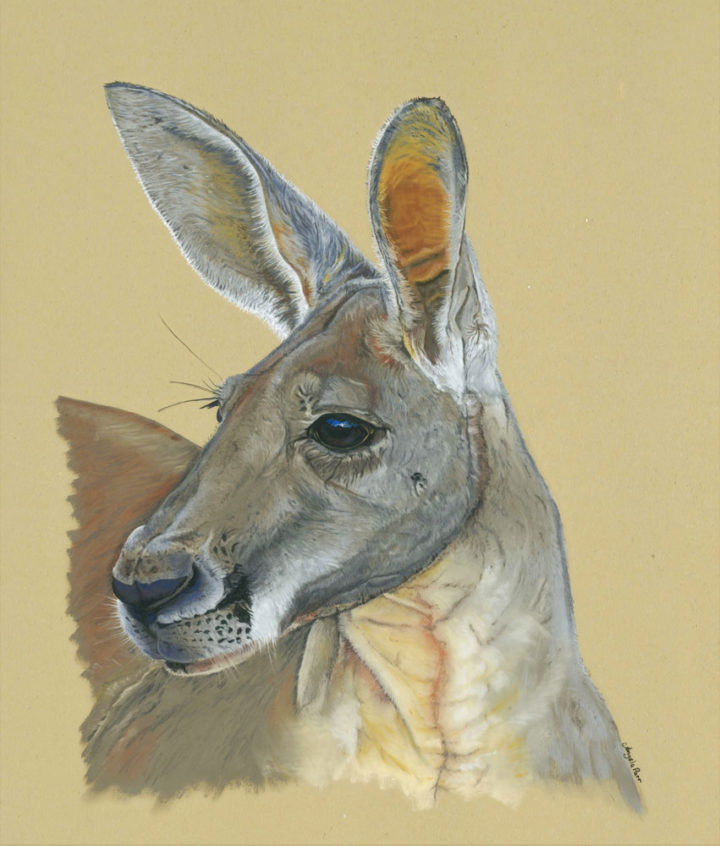
Andrew
Pastel on Pastelmat paper (Sold)
67 cm W x 88 cm H
Andrew is a big Red Kangaroo, (Macropus rufus) one of the many offspring of the famous alpha-male Red Kangaroo “Roger”, raised in the Kangaroo Sanctuary in Alice Springs. The Red Kangaroo is the largest of all kangaroos, which are terrestrial marsupials native to Australia, and they are found over most of the arid parts of the country, preferring flat open plains. Big Reds may weigh as much as 90kg and reach 1.8 meters in height when standing. When male kangaroos fight over potential mates, they appear to be boxing. They balance on their strong tails, grab their rival with their forearms and kick with their powerful hind legs. They attempt to push their opponent off balance. Kangaroos can also bite and wield sharp claws, which they may do in battle with an enemy like a dingo.Quick View -
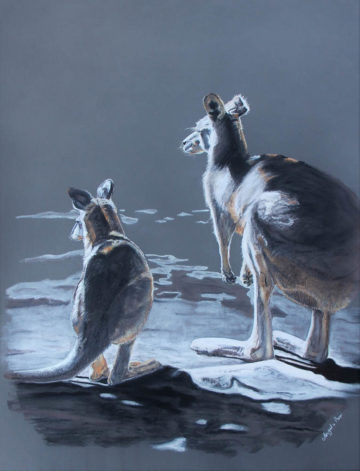
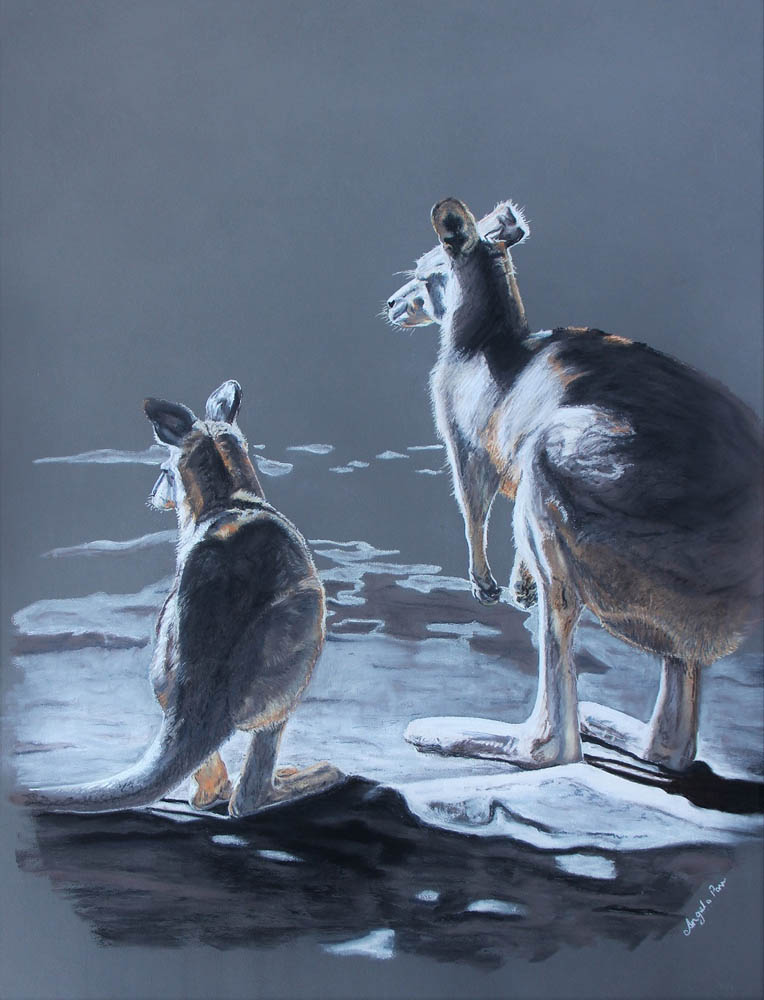
Morning Light
Pastel on Canson paper ($POA)
71 cm W x 91 cm H
The Eastern Grey Kangaroo, (Macropus giganteus), is one of 73 species of macropods. (The Greek words makros meaning large and poús or pod meaning foot) The key distinguishing features of all macropods are their triangular body shapes, large hind legs and feet, and disproportionately small front limbs. All have forward-facing pouches, and most use hopping as their primary mode of locomotion. The Eastern Grey is found in the eastern third of Australia, with a population of several million. They live in groups called Mobs and are highly sociable. Joeys usually stay in the pouch for 11 months and then continue to feed from their mother for an additional 9 months. This doe and joey were basking in the morning sunlight at Currumbin Wildlife Sanctuary.Read more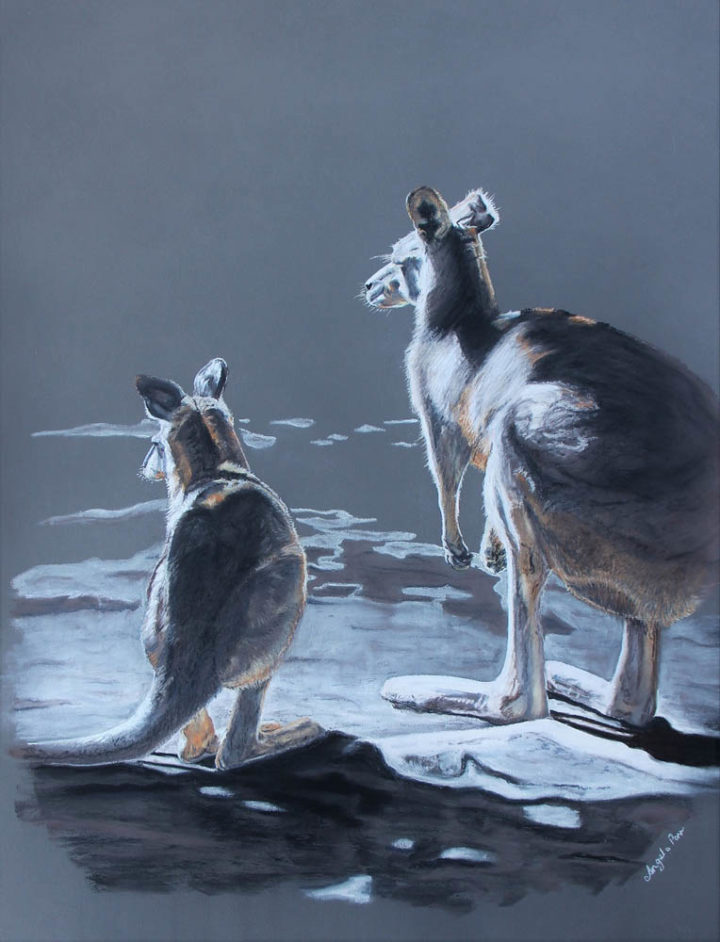
Morning Light
Pastel on Canson paper ($POA)
71 cm W x 91 cm H
The Eastern Grey Kangaroo, (Macropus giganteus), is one of 73 species of macropods. (The Greek words makros meaning large and poús or pod meaning foot) The key distinguishing features of all macropods are their triangular body shapes, large hind legs and feet, and disproportionately small front limbs. All have forward-facing pouches, and most use hopping as their primary mode of locomotion. The Eastern Grey is found in the eastern third of Australia, with a population of several million. They live in groups called Mobs and are highly sociable. Joeys usually stay in the pouch for 11 months and then continue to feed from their mother for an additional 9 months. This doe and joey were basking in the morning sunlight at Currumbin Wildlife Sanctuary.Quick View -
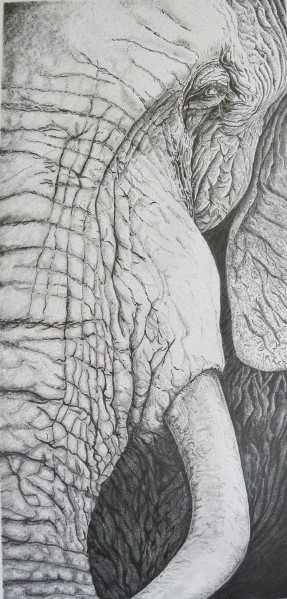
I am Elephant
Graphite on Arches paper ($POA)
42 cm W x 63 cm H
The African Bush Elephant (Loxodonta africana) is considered endangered, threatened by habitat loss and fragmentation, and poaching for the illegal ivory trade. African elephants have grey folded skin up to 30 mm thick that is covered with sparse, bristled dark brown to black hair. The trunk is a prehensile elongation of its upper lip and nose, manipulated by about 40,000–60,000 muscles and so strong that elephants can use it for lifting about 3% of their own body weight. They use it for smelling, touching, feeding, drinking, dusting, producing sounds, loading, defending and attacking. This artwork focuses on the skin, trunk and tusk of a large bull and attempts to convey the immense size and strength of these magnificent creatures.Read moreI am Elephant
Graphite on Arches paper ($POA)
42 cm W x 63 cm H
The African Bush Elephant (Loxodonta africana) is considered endangered, threatened by habitat loss and fragmentation, and poaching for the illegal ivory trade. African elephants have grey folded skin up to 30 mm thick that is covered with sparse, bristled dark brown to black hair. The trunk is a prehensile elongation of its upper lip and nose, manipulated by about 40,000–60,000 muscles and so strong that elephants can use it for lifting about 3% of their own body weight. They use it for smelling, touching, feeding, drinking, dusting, producing sounds, loading, defending and attacking. This artwork focuses on the skin, trunk and tusk of a large bull and attempts to convey the immense size and strength of these magnificent creatures.Quick View -
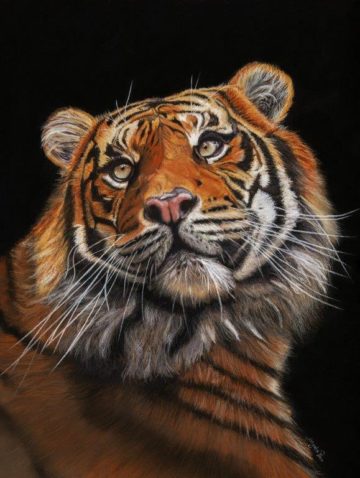
Just a Big Pussycat
Pastel on Colour Fix Art Spectrum paper ($POA)
44 cm W x 58 cm H
The Indian Tiger (Panthera tigris) is surely the most stunning of the big cats, with its distinctive dark vertical stripes on orange fur with a white underside. It is an apex predator, primarily preying on ungulates such as deer and wild boar. It is territorial and generally solitary. It is listed as endangered on the IUCN Red List. As of 2024, the global wild tiger population was estimated to number of 5,574 mature individuals, with most living in small, isolated pockets. Major reasons for population decline are habitat destruction, habitat fragmentation, human-wildlife conflict and poaching.
source World Animal Foundation
worldanimalfoundation.orgRead more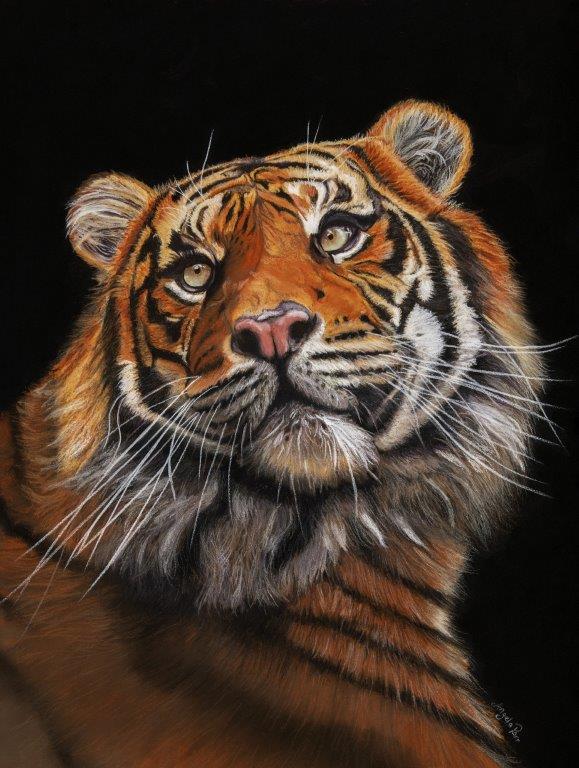
Just a Big Pussycat
Pastel on Colour Fix Art Spectrum paper ($POA)
44 cm W x 58 cm H
The Indian Tiger (Panthera tigris) is surely the most stunning of the big cats, with its distinctive dark vertical stripes on orange fur with a white underside. It is an apex predator, primarily preying on ungulates such as deer and wild boar. It is territorial and generally solitary. It is listed as endangered on the IUCN Red List. As of 2024, the global wild tiger population was estimated to number of 5,574 mature individuals, with most living in small, isolated pockets. Major reasons for population decline are habitat destruction, habitat fragmentation, human-wildlife conflict and poaching.
source World Animal Foundation
worldanimalfoundation.orgQuick View -
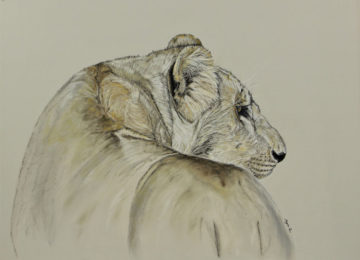
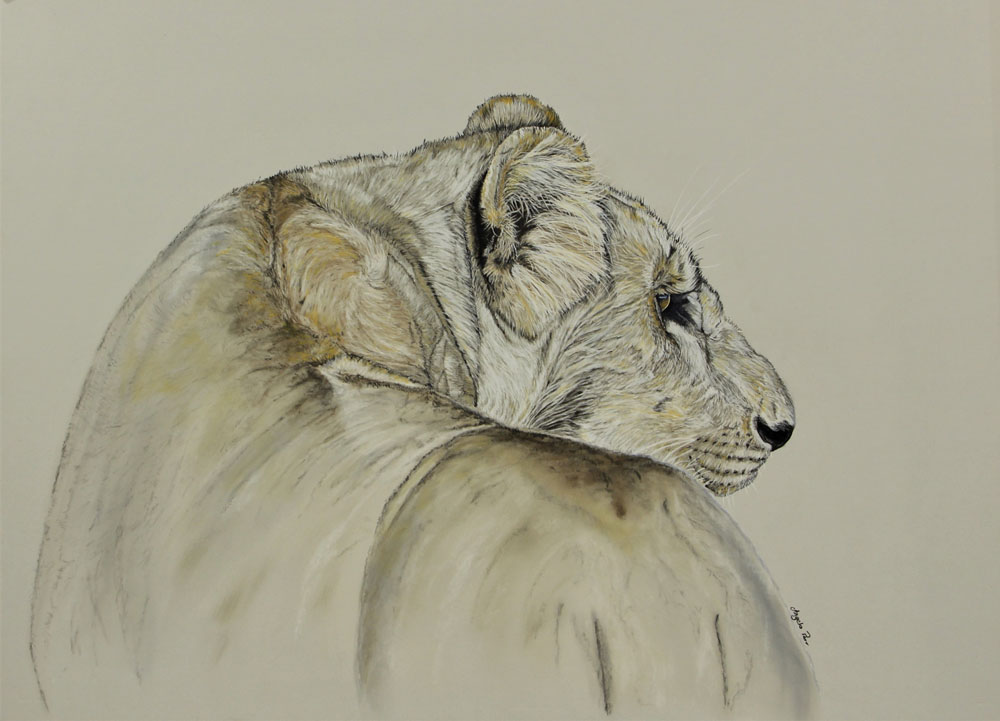
The Huntress
Pastel on Pastelmat Board ($POA)
(size to come)
Lions (Panthera leo) are unique among cats in that they live in a pride, often consisting of about 15 individuals. Lionesses are the chief hunters. They prey on animals of all sizes, including hippopotamuses, but prefer wildebeests, antelopes, and zebras. Lionesses are much faster than their male counterparts because of their sleeker and lighter bodies. A Lion runs at 35 mph however a Lioness can reach up to a speed of 45 mph.
This beautiful female in Tanzania was testing the breeze for possible prey in the vicinity.Read more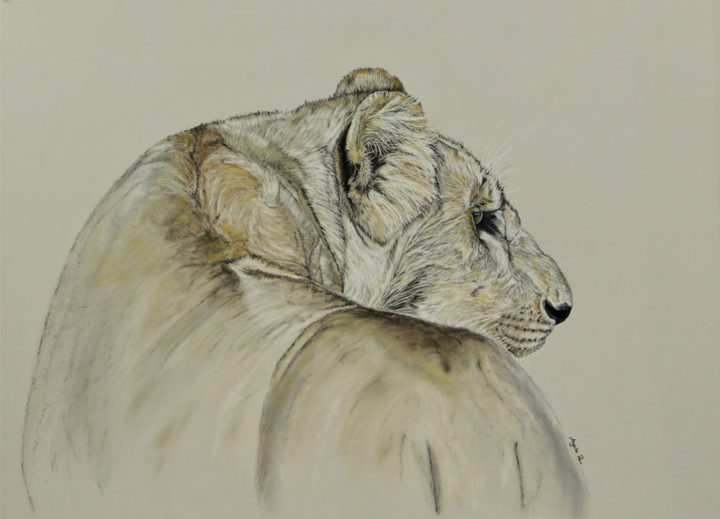
The Huntress
Pastel on Pastelmat Board ($POA)
(size to come)
Lions (Panthera leo) are unique among cats in that they live in a pride, often consisting of about 15 individuals. Lionesses are the chief hunters. They prey on animals of all sizes, including hippopotamuses, but prefer wildebeests, antelopes, and zebras. Lionesses are much faster than their male counterparts because of their sleeker and lighter bodies. A Lion runs at 35 mph however a Lioness can reach up to a speed of 45 mph.
This beautiful female in Tanzania was testing the breeze for possible prey in the vicinity.Quick View -
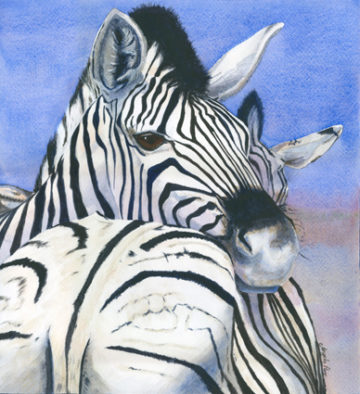
The Rear Guard
Watercolour on Arches paper ($POA)
30 cm W x 33 cm H
Being the favourite prey of lions, zebras must always be alert, and often stand head to tail to keep an eye on the terrain all around them. Naturally when they stand this way, they can also give each other a good scratch on the rump, and with their tails constantly swishing, help chase flies away from each other’s faces.Read more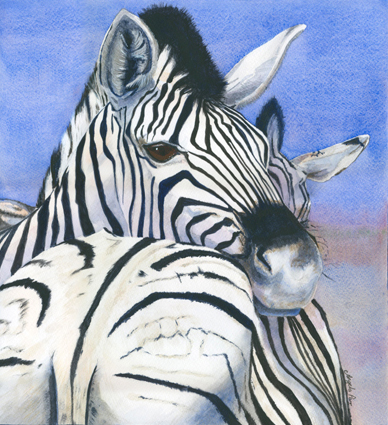
The Rear Guard
Watercolour on Arches paper ($POA)
30 cm W x 33 cm H
Being the favourite prey of lions, zebras must always be alert, and often stand head to tail to keep an eye on the terrain all around them. Naturally when they stand this way, they can also give each other a good scratch on the rump, and with their tails constantly swishing, help chase flies away from each other’s faces.Quick View -
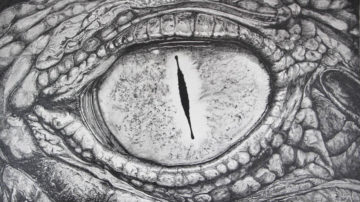
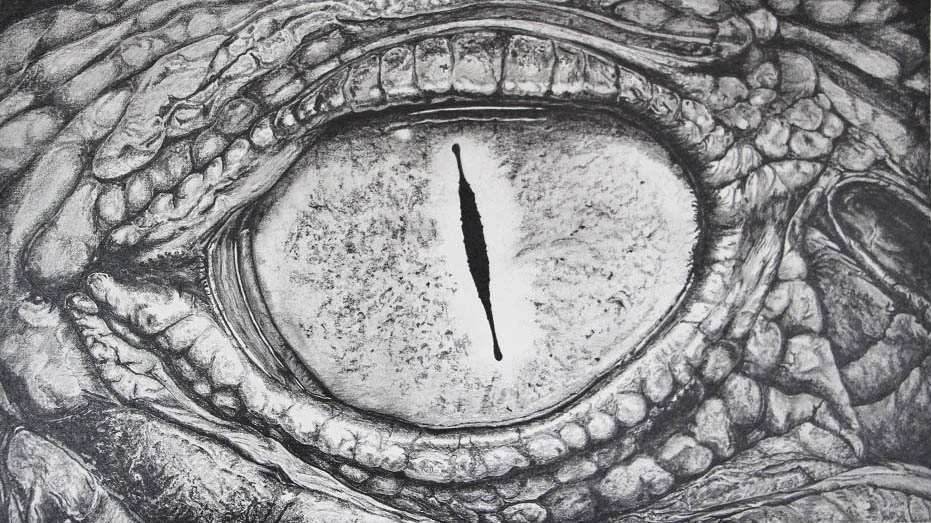
Watching and Waiting 1
Graphite on Arches paper (Sold)
45 cm W x 33 cm H
Earth’s largest living crocodilian—and, some say, the animal most likely to eat a human—is the saltwater or estuarine crocodile, (Crocodylus porosus). The typical male Saltwater Crocodile has an overall length of 4.25-7 m, with females at lengths of 2.30-3.35 m. An average male Saltwater Crocodile weighs between 400-1000 kg and has a typical lifespan of 70-100 years in the wild.
I have equal parts fascination and fear of these ancient reptiles but managed to convince myself to swim for 15 minutes in the famous “Cage of Death”, at Crocosaurus Cove in Darwin and eyeball a 5-metre monster through the acrylic-strengthened “glass” cage.Read more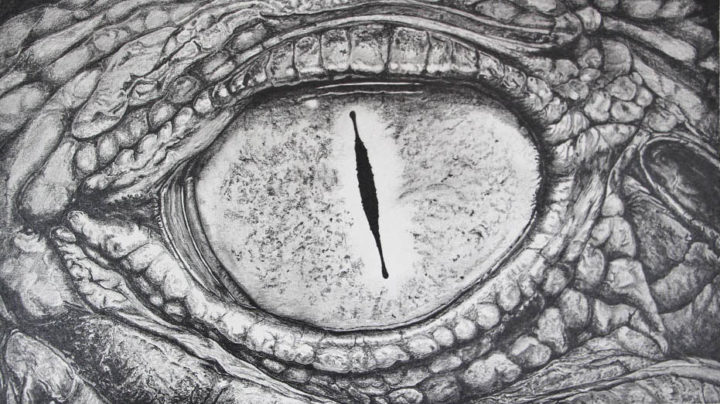
Watching and Waiting 1
Graphite on Arches paper (Sold)
45 cm W x 33 cm H
Earth’s largest living crocodilian—and, some say, the animal most likely to eat a human—is the saltwater or estuarine crocodile, (Crocodylus porosus). The typical male Saltwater Crocodile has an overall length of 4.25-7 m, with females at lengths of 2.30-3.35 m. An average male Saltwater Crocodile weighs between 400-1000 kg and has a typical lifespan of 70-100 years in the wild.
I have equal parts fascination and fear of these ancient reptiles but managed to convince myself to swim for 15 minutes in the famous “Cage of Death”, at Crocosaurus Cove in Darwin and eyeball a 5-metre monster through the acrylic-strengthened “glass” cage.Quick View -
Scamper and Scurry
Pastel on Mi Tientes Tex (Sold)
53 cm W x 43 cm H
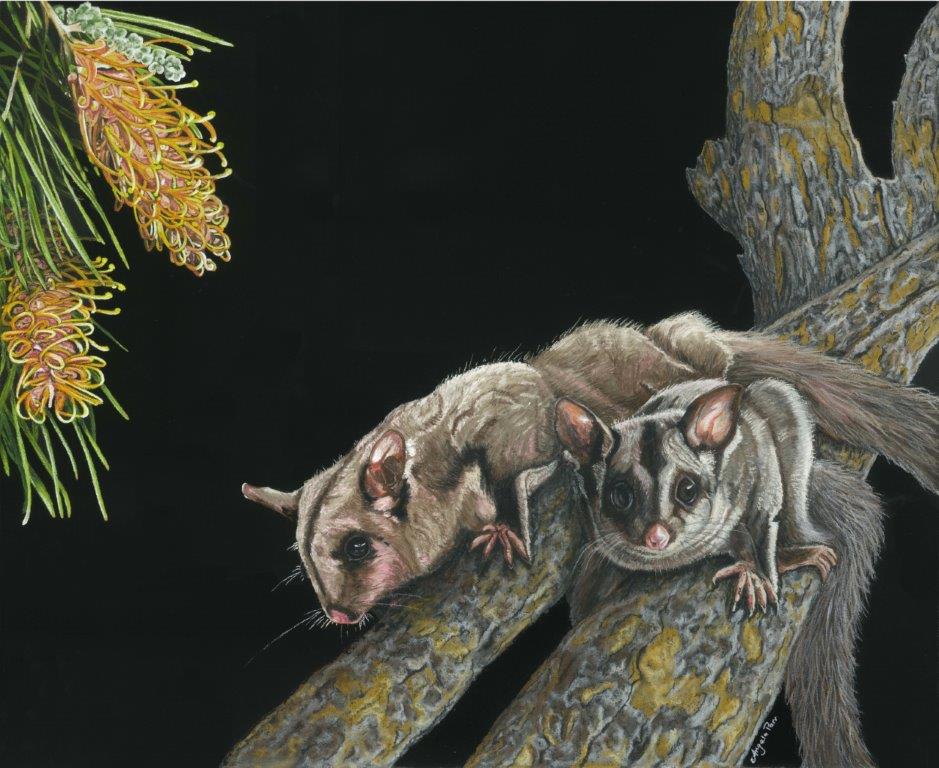
The models for this artwork are Samson and Sebastian, four-year-old brothers and the resident Sugar gliders of Byron Bay Wildlife Sanctuary (formerly Macadamia Castle). The sugar glider (Petaurus breviceps) is a small, omnivorous, arboreal, and nocturnal gliding possum belonging to the marsupial infraclass. The common name refers to its predilection for sugary foods such as sap and nectar (hence the inclusion of the grevillea in the artwork) and its ability to glide through the air, much like a flying squirrel. Its pair of gliding membranes, known as patagia, extend from its forelegs to its hindlegs enabling it to glide 50 metres or more. Gliding serves as an efficient means of reaching food and evading predators.Read more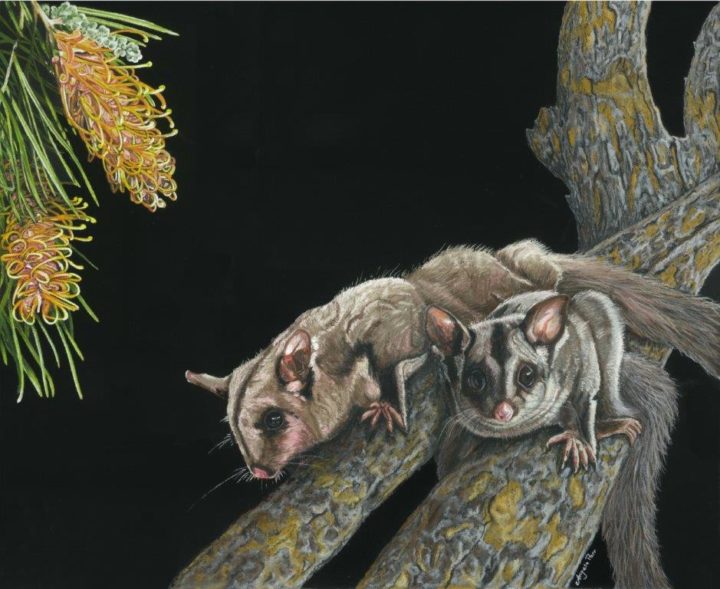
Scamper and Scurry
Pastel on Mi Tientes Tex (Sold)
53 cm W x 43 cm H
The models for this artwork are Samson and Sebastian, four-year-old brothers and the resident Sugar gliders of Byron Bay Wildlife Sanctuary (formerly Macadamia Castle). The sugar glider (Petaurus breviceps) is a small, omnivorous, arboreal, and nocturnal gliding possum belonging to the marsupial infraclass. The common name refers to its predilection for sugary foods such as sap and nectar (hence the inclusion of the grevillea in the artwork) and its ability to glide through the air, much like a flying squirrel. Its pair of gliding membranes, known as patagia, extend from its forelegs to its hindlegs enabling it to glide 50 metres or more. Gliding serves as an efficient means of reaching food and evading predators.Quick View -
Little Bentwing Bats Roosting
Pastel on Canson paper (Sold)
63 cm W x 48 cm H
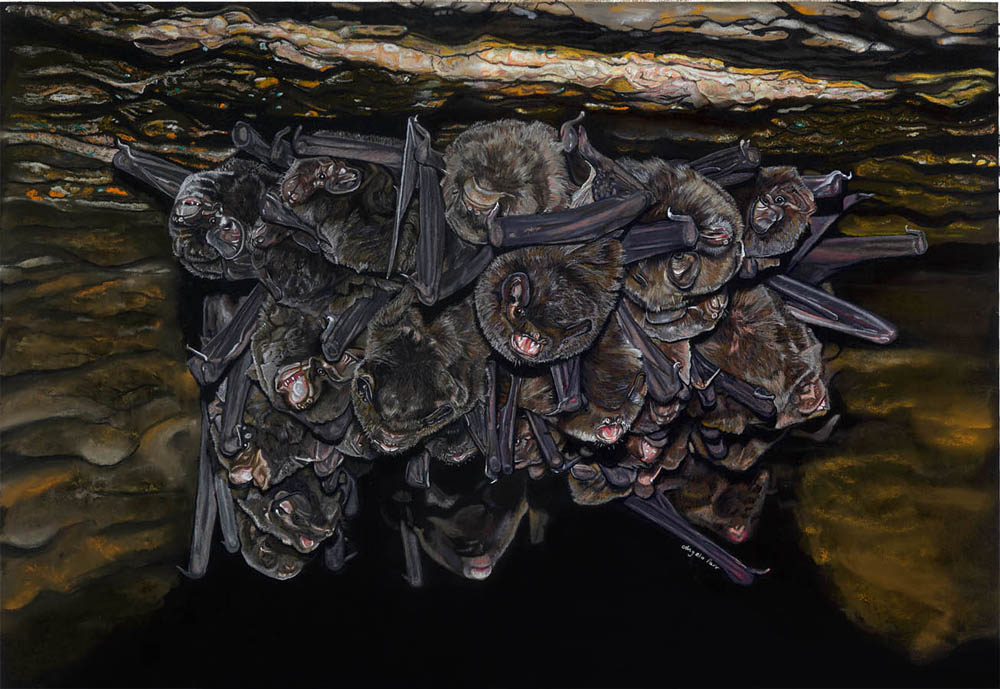
Little Bent-wing Bats (Miniopterus australis) roost in caves, mine tunnels and tree hollows, often in colonies numbering in the hundreds. Common Bent-wing Bats are often found roosting alongside them. Like all microbats, Little Bent-wing Bats also feed on small insects that fly beneath the canopy of thick forests. They are agile fliers, having to manoeuvre through the trees to catch their prey. Female Little Bent-wing Bats have a single baby in summer. They leave their babies in nursery caves at night to go and hunt, returning in the morning. These bats are also vulnerable to disturbance from human visitors to cave roosts, destruction of caves by limestone mining, and loss of feeding habitat by forestry operations, clearing and land degradation from agriculture.
I enjoyed creating this artwork although I found it challenging controlling the pastel dust fallout on the black paper and counting all those heads, making sure everything aligned correctly.Read more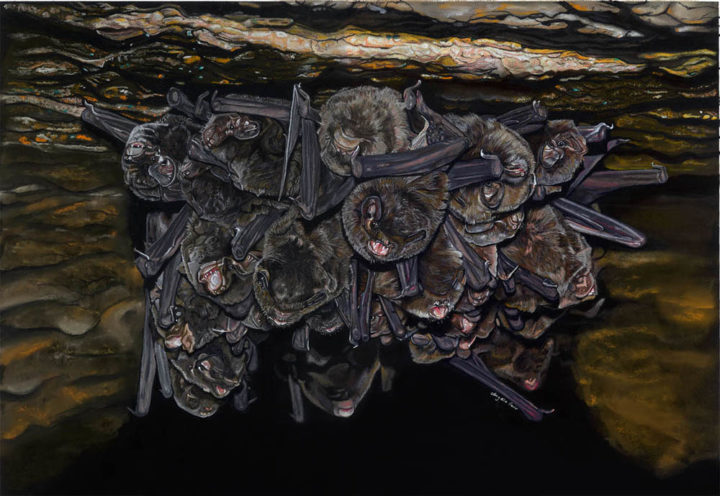
Little Bentwing Bats Roosting
Pastel on Canson paper (Sold)
63 cm W x 48 cm H
Little Bent-wing Bats (Miniopterus australis) roost in caves, mine tunnels and tree hollows, often in colonies numbering in the hundreds. Common Bent-wing Bats are often found roosting alongside them. Like all microbats, Little Bent-wing Bats also feed on small insects that fly beneath the canopy of thick forests. They are agile fliers, having to manoeuvre through the trees to catch their prey. Female Little Bent-wing Bats have a single baby in summer. They leave their babies in nursery caves at night to go and hunt, returning in the morning. These bats are also vulnerable to disturbance from human visitors to cave roosts, destruction of caves by limestone mining, and loss of feeding habitat by forestry operations, clearing and land degradation from agriculture.
I enjoyed creating this artwork although I found it challenging controlling the pastel dust fallout on the black paper and counting all those heads, making sure everything aligned correctly.Quick View -
Long Eared Bat Being Held
Pastel on Canson paper ($POA)
63 cm W x 48 cm H
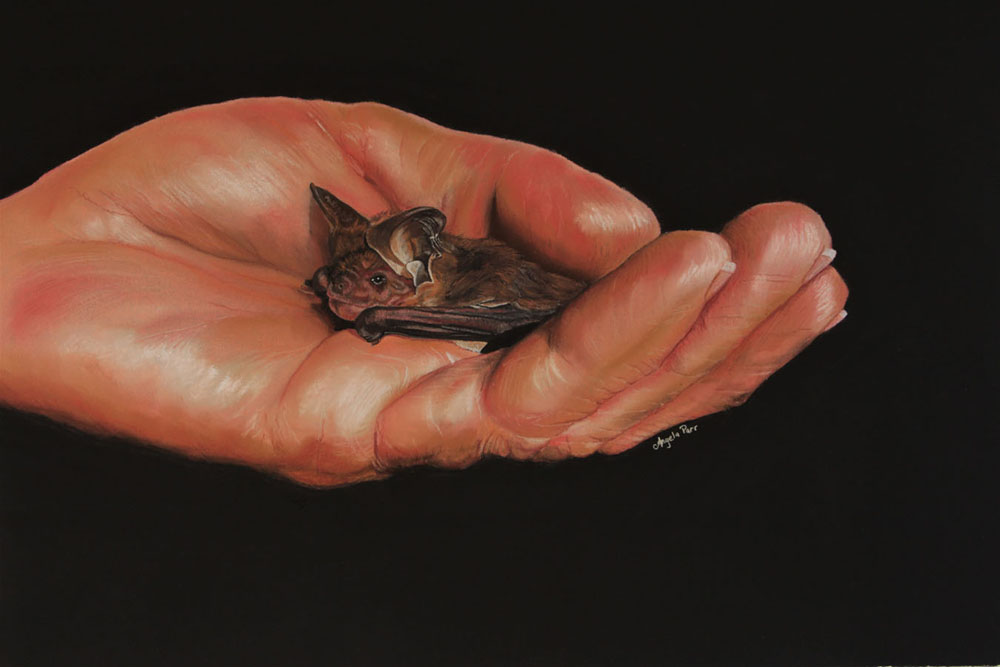
This was the final artwork of the “bat” series, (there were 8 in total), and this is probably my favourite as it clearly shows the diminutive size of microbats. Lesser Long-eared Bats (Nyctophilus geoffroyi) occur in towns and suburbs, roosting in hollows and fissures in old trees, under bark, in old fairy marten (bird) nests and occasionally in caves. They also often roost in ceilings, hollow walls, unused roller doors and canvas awnings in suburban and inner-city areas. Lesser Long-eared Bats hunt near the ground, and swoop around street lights at night catching insects. They are at risk from pesticides and cats. Luckily they prefer hollows of big old eucalypts for nursery colonies.Read more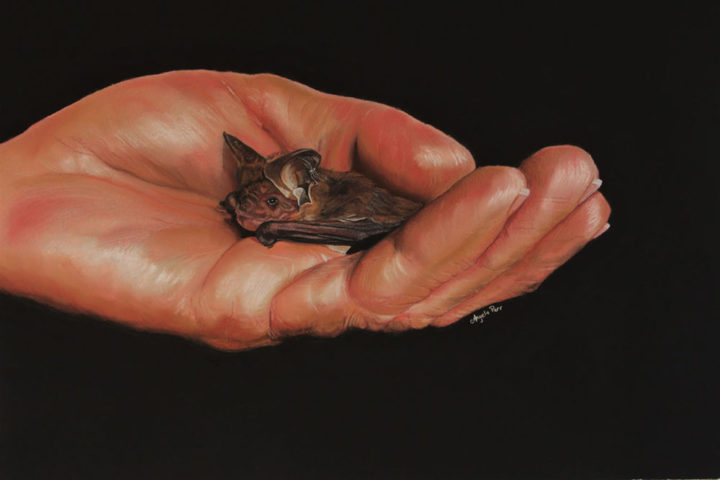
Long Eared Bat Being Held
Pastel on Canson paper ($POA)
63 cm W x 48 cm H
This was the final artwork of the “bat” series, (there were 8 in total), and this is probably my favourite as it clearly shows the diminutive size of microbats. Lesser Long-eared Bats (Nyctophilus geoffroyi) occur in towns and suburbs, roosting in hollows and fissures in old trees, under bark, in old fairy marten (bird) nests and occasionally in caves. They also often roost in ceilings, hollow walls, unused roller doors and canvas awnings in suburban and inner-city areas. Lesser Long-eared Bats hunt near the ground, and swoop around street lights at night catching insects. They are at risk from pesticides and cats. Luckily they prefer hollows of big old eucalypts for nursery colonies.Quick View -
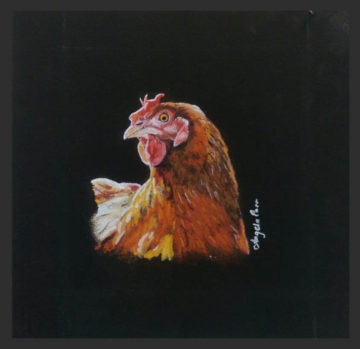
Chicken (Miniature)
Pastel on Canson paper (Sold)
15 cm W x 15 cm H
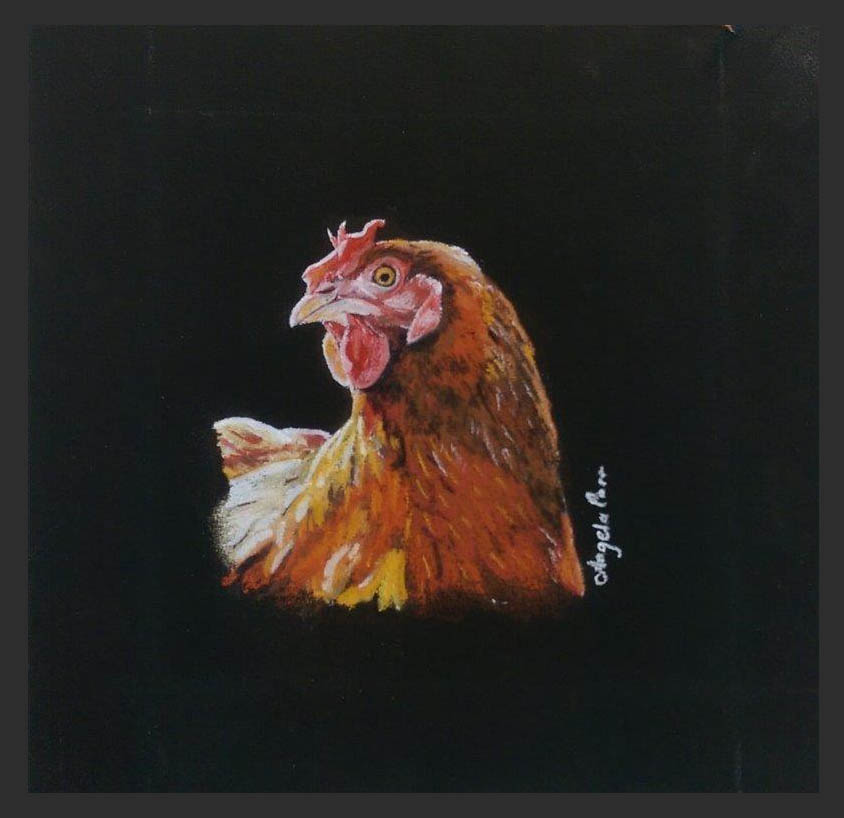
This small fun piece was done as a donation for a Cancer Council fundraiser.Read more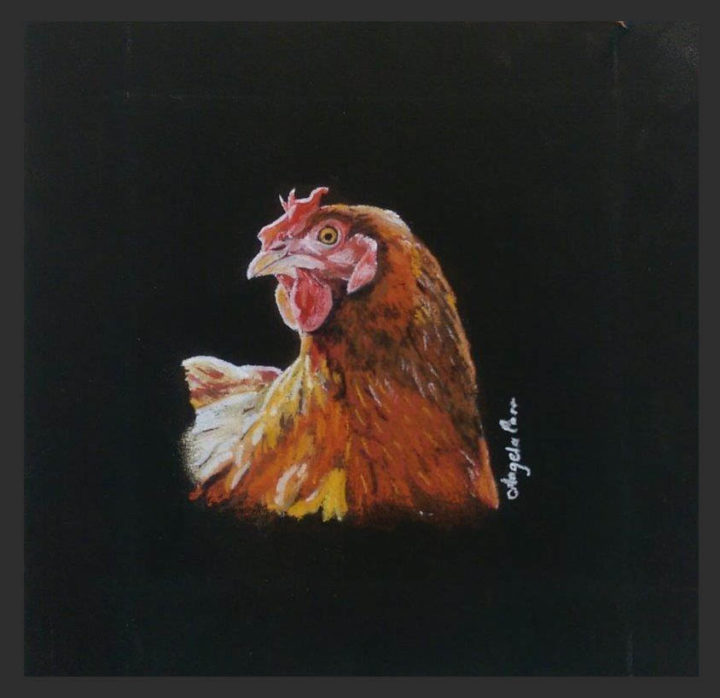
Chicken (Miniature)
Pastel on Canson paper (Sold)
15 cm W x 15 cm H
This small fun piece was done as a donation for a Cancer Council fundraiser.Quick View